

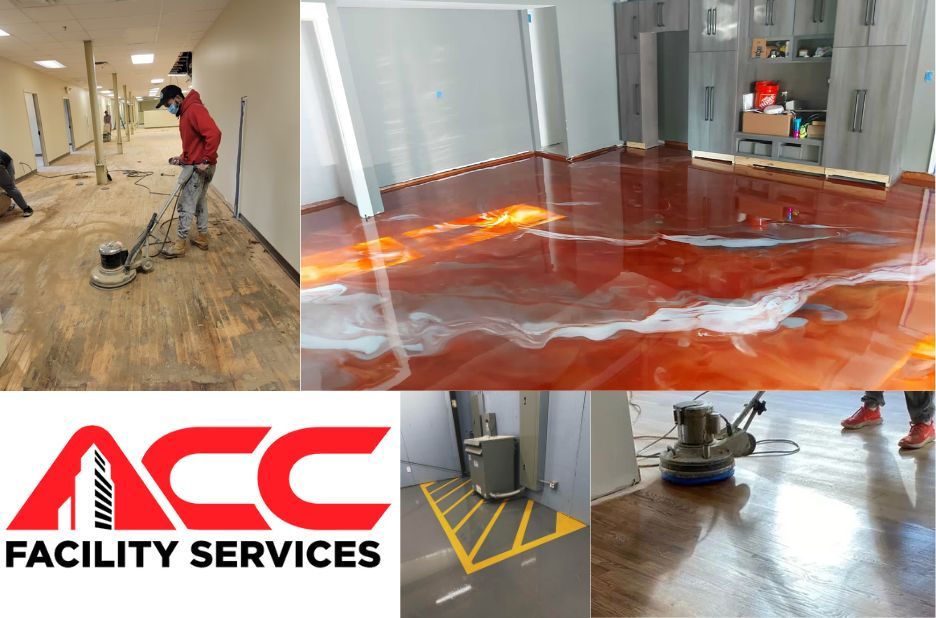
Assess the Surface and Choose the Right Finish
Before polishing begins, the slab condition determines what results you can realistically achieve. A reputable team evaluates flatness, cracks, surface contamination, and moisture conditions because these factors affect grinding performance and long-term appearance. If the concrete is uneven, early polished concrete correction grinding helps prevent low spots from becoming permanent dull areas. It’s also important to remove paint, curing compounds, and adhesives so the system bonds properly during each stage of the process.
Next, decide on the level of sheen you want, since that choice influences both appearance and maintenance. Higher-gloss finishes generally require more refined grinding and a careful densifier strategy, while satin looks are often more forgiving for heavy-traffic spaces. Ask about how they plan to treat joints and whether patching is needed for spalls or surface defects. For facilities managing constant foot traffic, selecting the right finish helps balance visual impact with practicality.
Plan the Workflow: Grinding, Densifying, and Sealing
A practical plan starts with staged grinding using progressively finer abrasives to achieve the desired smoothness and reflectivity. Teams typically begin with coarse grinding to open the surface and address irregularities, then move to finer steps to create a consistent epoxy flooring profile. Densifying treatments are commonly applied after early grinding to strengthen the surface and reduce dusting. This step improves wear resistance and helps the final topcoat look more uniform across the entire floor.
After densification, the finishing stage focuses on clarity and durability, especially if the floor will be exposed to frequent cleaning and impact. Some facilities prefer a low-sheen clear sealer to protect against staining and everyday wear, while others use systems designed for enhanced chemical resistance. You should also confirm whether the contractor will polish around edges and transitions carefully, including stair landings and door thresholds. A well-executed workflow reduces haze, prevents blotchy areas, and ensures the floor responds consistently to routine maintenance.
Maintenance Practices that Protect Shine and Reduce Downtime
Polished surfaces last longer when cleaning is consistent and done with the right products. Sweep or dust-mop frequently to remove grit that can act like sandpaper, then use a neutral cleaner approved for concrete finishing systems. Avoid acidic cleaners and harsh detergents that can dull the surface or interfere with protective layers. For facilities with frequent spills, place absorbent materials quickly and rinse with clean water to minimize staining risk.
In addition to routine cleaning, establish a periodic maintenance schedule that matches the floor’s traffic level. Burnishing can restore appearance on some finished surfaces without stripping, while periodic deep cleaning can remove embedded residue from mopping. If the floor includes decorative elements or color variation, test any cleaner in a small section to confirm compatibility. This approach helps maintain a professional look while reducing the need for disruptive repairs.
When to Pair with Coatings for Maximum Performance
Not every facility relies on polishing alone, and many owners add coatings to tailor performance for specific environments. Epoxy floor systems can provide excellent impact resistance and a reliable barrier against oils and chemicals in areas like loading bays or maintenance rooms. If your space experiences frequent exposure to grease, solvents, or abrasive debris, a combined approach may outperform polishing by itself. A qualified contractor can recommend whether coating is best for the entire area or only for high-risk zones.
When evaluating options, ask how coatings will be prepared to adhere successfully over the existing concrete profile. Proper surface preparation—often including mechanical cleaning and verification of moisture—helps prevent peeling or blistering. Confirm whether the polished finish will remain compatible with the chosen coating, especially at boundaries and expansion joints. For a polished look with practical protection, selecting a proven method supports cleanability, durability, and consistent aesthetics across the facility.
For premium results, ACC Facility Services can help facility teams choose a finish strategy that balances strength, shine, and long-term care. Their work emphasizes durability and visual appeal, and the team at atlantaflooring.io supports expert polishing services that enhance surface hardness and longevity. When you pair correct preparation with a maintenance-friendly system, your floors stay easier to manage while keeping a professional appearance. That means fewer surprises, smoother operations, and long-lasting performance from and complementary flooring choices.
Conclusion
Visit ACC Facility Services for more details.