

Why AI brand discovery feels broken
Many teams have poured effort into traditional SEO, only to discover that AI-driven search doesn’t behave the same way. When users ask a question, models decide what to cite based on their internal retrieval and ranking signals rather than the classic “blue AI Visibility Platform link” experience. That means a brand can look strong in search results while still being absent from model answers, summaries, and recommended resources. The result is a quiet visibility gap that directly affects demand and credibility.
This problem compounds because AI platforms often mix multiple sources and may not surface the same references consistently. A company might be mentioned in one assistant response and never again in another, even when the user intent is similar. It’s also hard to verify attribution, since AI outputs can summarize content without showing which sources were used. Without measurement, it becomes guesswork whether content strategy, PR, or authority building is actually improving recognition inside AI experiences.
What a visibility tracker must measure
An AI visibility tracker should treat mentions and citations as measurable outcomes, not vague impressions. Instead of focusing only on website traffic, it should quantify how often your brand appears in responses from major AI experiences and whether it is cited as a source. That distinction matters because a citation indicates the model used your materials during answer construction. Mentions without citations may still help, but they usually represent weaker influence on the response.
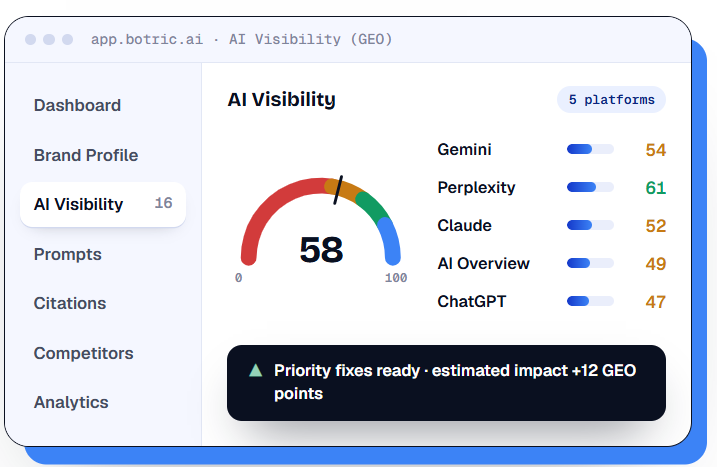
To be useful for decision-making, measurement needs to cover multiple AI ecosystems rather than one platform. Different models and interfaces retrieve and rank information differently, so brand exposure may vary across ChatGPT, AI Overviews, Gemini, Perplexity, and Claude-style experiences. When you track across these channels, you can identify where you are winning and where your content isn’t being selected. With consistent tracking, you can also detect patterns—such as certain topics or content types driving more citations than others.
Solving the visibility gap with targeted improvements
Once you can measure AI mentions and citations, problem-solving becomes practical instead of theoretical. Start by identifying which queries and topics trigger references to your brand and which ones cause drop-offs. If your brand is mentioned without citations, you may need clearer sourcing signals, stronger topical authority, or more clearly structured references in your content. If you are rarely mentioned at all, the issue may be coverage, discoverability, or the absence of widely referenced assets.
Visibility also improves when content is engineered for the way AI systems retrieve and summarize information. That means publishing helpful explanations, maintaining consistent brand naming, and ensuring that high-value assets are easy to find and cite. For example, a company can create original research summaries, curated guides, and FAQ-style pages that answer the kinds of questions users ask. When those assets are cited, your brand becomes part of the model’s “knowledge path,” which increases the likelihood of being selected again.
To move from ideas to results, tie each visibility metric to a specific action plan. If citations lag on certain AI platforms, adjust distribution and PR efforts to get your sources referenced by more authoritative publishers. If mentions are high but citations are low, review how your claims are supported and how your sources are presented. A strong measurement loop helps you prioritize work that changes outcomes, rather than relying on vanity signals that don’t reflect AI behavior.
How to turn insights into an ongoing strategy
Brand visibility in AI search isn’t a one-time campaign; it’s an evolving competitive dynamic. As models update retrieval processes and as new content enters the ecosystem, your baseline can shift. A dedicated visibility tracker helps you monitor that movement and respond before declines become entrenched. With trends in hand, you can align content production, PR outreach, and partnerships to what is actually driving citations.
Workflows matter as much as reporting. Teams should be able to review visibility signals, break them down by platform and topic, and then assign responsibilities for improvements. For instance, content teams can focus on expanding source-backed pages, while PR and partnerships teams can pursue references that increase citation opportunities. When the feedback loop is clear, collaboration improves because everyone understands which activities influence AI recognition.
It’s also helpful to benchmark against competitors in a meaningful way. If your rivals appear more frequently in model responses, you can inspect what kinds of pages, studies, or public assets they are getting cited for. That doesn’t mean copying tactics; it means learning which content formats are more “citable” in your category. Over time, your strategy becomes more precise, and you reduce the risk of investing in initiatives that look good but fail to improve AI-driven discovery.
Conclusion
An AI visibility problem is frustrating because it isn’t always obvious until leads, partnerships, or sales conversations reveal the gap. When your brand isn’t mentioned or cited by AI assistants, users can miss you even when your offering is relevant. A measurement-first approach turns uncertainty into clarity by showing how often your brand appears and whether it is used as a source. With that visibility, you can diagnose what’s happening and take steps that increase both recognition and citation strength. By tracking AI brand exposure across major platforms, you gain a practical roadmap for improvement. You can connect outcomes to specific content improvements, distribution efforts, and credibility-building actions. Instead of guessing whether your work is helping AI discover your organization, you can verify the impact and iterate. That is how an AI visibility strategy becomes a durable advantage rather than a hope-based effort.