

Why Local Context Matters for Electricity Claims
When people see bold marketing for an “energy revolution,” the first instinct is to imagine instant savings on their electric bill. But local conditions—utility rates, grid reliability, permitting rules, and even your home’s wiring—can change what’s realistic. In many areas, the biggest cost driver free electricity claims is not the price of electrons, but the cost of delivering them safely through regulated infrastructure.
It’s also worth noting that neighborhoods differ in how they experience outages and how quickly utilities restore service. If a system claims it can replace grid power, it should clarify what happens when the grid goes down, how homeowners manage loads, and how safety protections are implemented. A credible plan would discuss interconnection, whether it’s off-grid or grid-tied, and what equipment is needed beyond the initial instructions. Marketing that focuses only on sensational results often avoids these practical details, which is why local relevance should guide your scrutiny.
What the Energy Revolution System Actually Costs
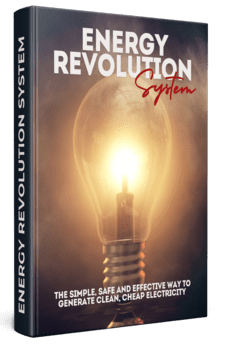
The Energy Revolution System is sold as a $39 PDF guide, and that price point matters because it signals a particular type of product. A guide can explain concepts, provide diagrams, or outline a build process, but it cannot magically manufacture hardware, components, or permitting approvals for you. If you’re evaluating whether your household could truly achieve meaningful power generation, you should compare the guide cost to the real expenses of building and testing an electrical system. Without that comparison, it’s easy to confuse instruction with a complete, working power solution.
Consumers often see refund policies mentioned in checkout flows, and it’s smart to understand the terms before buying. ClickBank commonly offers a 60-day refund window, which means you may have time to review the material, assess feasibility, and decide if it’s worth your effort. However, a refund policy doesn’t eliminate the risk of wasted time, extra purchases for components, or the frustration of discovering that key technical steps are unclear. Any claim of “free electricity” should be evaluated against both engineering practicality and what you actually receive from the purchase.
Physics Check: The “Tesla” Type Promises
Some advertisements for the system reference well-known figures and high-level ideas, but the outcome still has to match measurable physics. Electricity generation requires an energy source, whether it’s chemical fuel, mechanical motion, solar input, wind energy, or another form of power conversion. If a method claims to produce usable household electricity with no corresponding energy input, it effectively contradicts conservation principles. A responsible review should ask: where does the energy come from, what are the conversion stages, and what efficiencies are assumed?
Many viral claims blur the difference between small demonstrations and full-scale power for everyday appliances. A device might produce a signal, generate a small measurable effect, or light something briefly, but household electricity demands are orders of magnitude larger. To evaluate such promises, look for quantified output—watts produced over time, voltage regulation, load-handling ability, and performance under realistic conditions. If the material relies on vague descriptions rather than specific measurements, it’s difficult to connect the marketing to a dependable power system.
When you test a claim against fundamentals, you also need to consider safety and reliability. Even if a prototype produces a sensation of “power,” it may still be unstable, inefficient, or dangerous under real household loads. Electrical projects that involve high voltages, rotating components, or energy storage require careful protection and grounding. If the guide doesn’t clearly explain these elements, it’s a warning sign—not just a minor omission.
How to Spot Misleading “Free Electricity” Narratives
One of the most common tactics in energy marketing is using the word “free” to describe something that is only free at the point of consumption. Many systems quietly assume you already have expensive inputs covered—such as solar panels, batteries, fuel, or a baseline energy source—then rebrand the result as costless. If your electric bill still depends on the grid, or if you must continuously buy components, maintenance, or replacement parts, then the claim needs clearer accounting. A practical evaluation should separate “lowered costs” from “no costs,” because those are not the same.
Another red flag is the absence of a full bill-of-materials and a clear path to commissioning. Homeowners need to know what hardware is required, what tools are necessary, and what testing proves the system works. Without schematics that map input to output and documentation that demonstrates repeatable performance, it becomes difficult to trust any promise of sustained generation. Strong instructions would also address limitations, such as expected output ranges, seasonal impacts, and realistic battery or load management.
You should also compare the claim to alternatives that have established, verifiable performance. For example, grid-tied solar can be estimated using local sunlight data and can be modeled for expected kWh production. Similarly, battery-backed backup solutions have known safety standards and integration requirements. When “free electricity” claims are vague, they avoid the level of modeling and verification that reputable energy solutions embrace.
Conclusion
Energy Revolution System is positioned as an accessible PDF guide, and its low entry price may feel appealing at first glance. A strong idea should provide clear energy input, quantified output, safety considerations, and a realistic roadmap for installation or operation. If you’re considering purchasing, treat the refund window as a risk-management step rather than proof the method works. Verify what you receive, review whether the instructions include complete component guidance, and look for performance metrics that align with how homes actually consume power. The best decision is the one grounded in measurable results, transparent assumptions, and practical feasibility for your specific area.